Renue By Science Trigonelline Review: Mortalis Labs vs Codeage
- Feb 13
- 7 min read
Updated: Feb 19
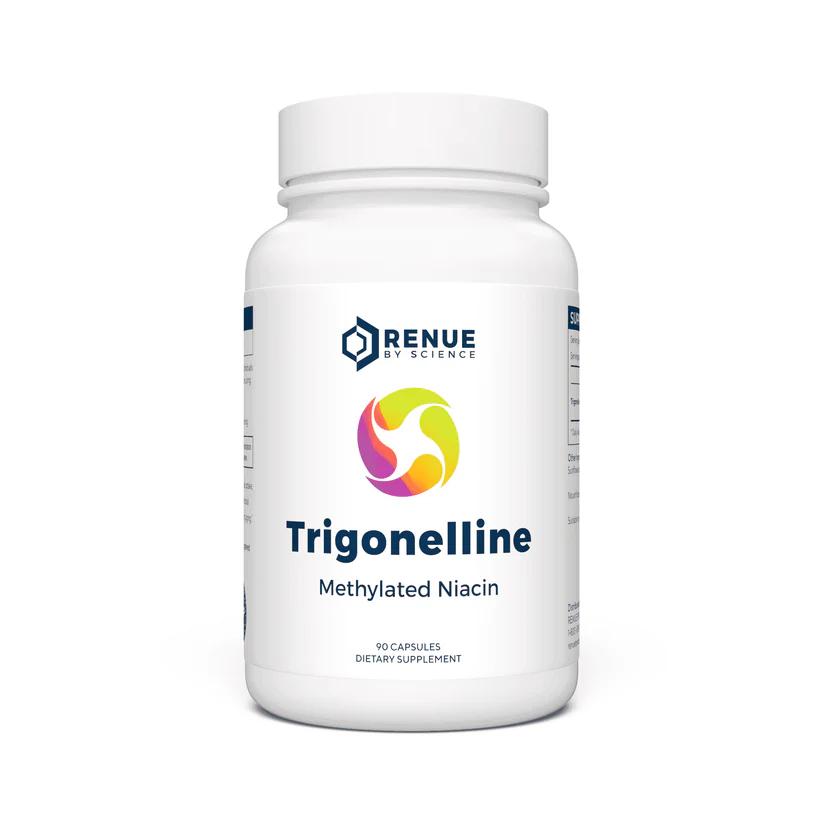
Renue By Science Trigonelline
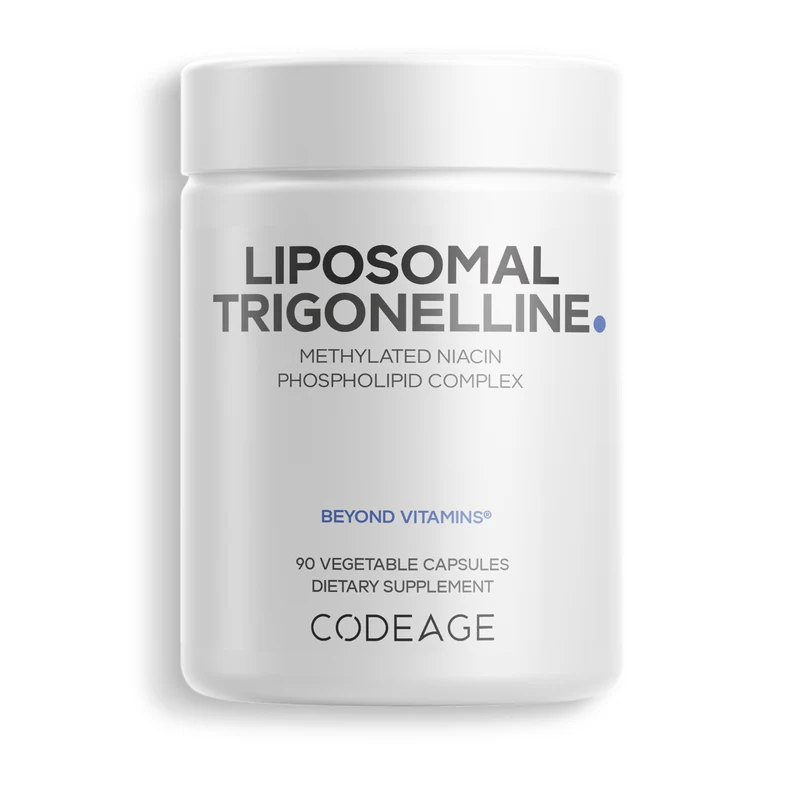
Renue By Science Trigonelline is a trigonelline supplement positioned around NAD+ support and often described as “methylated niacin” in its marketing. In this comparison review, it’s stacked against Mortalis Labs Trigonelline (300 mg trigonelline hydrochloride with no fillers) and Codeage Liposomal Trigonelline (250 mg with a phospholipid “liposomal” delivery system) to help you choose the best fit based on dose, formulation, transparency, and practicality.
Quick verdict (60 seconds)
Most minimalist (no fillers/additives): Mortalis Labs — 300 mg trigonelline hydrochloride (HCl), simple label philosophy, COA shown.
Most “delivery-tech” oriented: Codeage — 250 mg trigonelline with sunflower lecithin/phosphatidylcholine (“liposomal” approach) plus added ingredients.
Most documentation-forward NAD+ positioning: Renue By Science — 250 mg class dose, brand emphasizes NAD+ pathway framing and publishes testing documents.


Why trigonelline is trending (and what the research actually says)
Trigonelline is a naturally occurring compound found in foods like coffee and fenugreek. Interest in supplemental trigonelline increased after a 2024 paper in Nature Metabolism reported that trigonelline can contribute to the NAD+ pool in experimental models and that serum trigonelline levels were associated with measures of muscle function in human observational data.
Two important buyer notes:
Association isn’t the same as guaranteed outcome. Much of the excitement comes from mechanistic and preclinical findings plus correlations in humans. That doesn’t automatically translate to predictable supplement results for everyone.
Supplement quality matters more than marketing. Because this is a newer category, the best consumer protection is comparing what’s measurable: dose per capsule, form, excipients, and whether the brand shares third-party testing documentation.
This article stays in “wellness support” territory and focuses on product evaluation rather than disease claims.
Comparison: Renue By Science vs Mortalis Labs vs Codeage
At-a-glance table
Brand | Trigonelline per capsule | Form of Trigonelline | Capsules per Bottle | “other ingredients” | Purity |
Renue By Science | 250 mg | methylated niacin | 90 | Rice Flour | Not Listed |
Mortalis Labs | 300 mg | Trigonelline Hydrochloride (HCl) | 60 | Zero fillers / zero additives | 100.9% |
Codeage | 250 mg | “Liposomal” delivery of Methylated Niacin using sunflower lecithin/phosphatidylcholine | 90 | cellulose, phospholipids/lecithin, L-leucine | Not Listed |
Tip: When choosing between these, don’t get stuck on buzzwords. Start with (1) dose, then (2) excipients, then (3) testing transparency, and only then (4) delivery concept.
Renue By Science Trigonelline Review
What it is
Renue By Science markets trigonelline within an NAD+ framework and commonly refers to it as “trigonelline (methylated niacin)”. The brand’s narrative emphasizes stability and digestion-related considerations (for example, capsule design).
Dose and serving design
Renue By Science positions its product at the 250 mg per capsule level and typically sells it in a 90-capsule format. That aligns with the common “one capsule daily” pattern seen across the category.
What matters most: consistency between the label claim and posted testing documentation. When brands publish potency documentation, that’s generally a stronger consumer signal than branding language.
Testing and documentation
A major reason consumers choose Renue is that the company is known for posting documentation (such as COAs or related quality panels). In a category where many brands provide little to no verification, visible documentation can reduce uncertainty—assuming it’s current, legible, and batch-specific.
Ingredient-list clarity (excipients)
Renue emphasizes capsule design (often “acid-resistant” positioning). Capsule technology can be a legitimate formulation choice, but consumers who are highly sensitive to additives should still confirm the current “other ingredients” list.
Who Renue By Science is best for
People who like the NAD+ pathway framing and want trigonelline as part of that broader “cellular energy” conversation
Shoppers who prefer brands that commonly provide product documentation
Those who like the idea of an engineered capsule approach (digestive protection positioning)
Potential downsides
If your #1 priority is the simplest possible label with no extra ingredients, Renue’s capsule approach may not be as minimalist as a single-ingredient product.
If you care deeply about excipient transparency, you’ll want to verify the most current label details before purchasing.
Mortalis Labs Trigonelline Review
What it is
Mortalis Labs offers Trigonelline Hydrochloride (HCl) at 300 mg per capsule, packaged as 60 capsules per bottle. The core philosophy is simplicity: no fillers, no additives, and an easy-to-swallow capsule. Mortalis Labs Trigonelline is their flagship product.
Dose advantage
Among these three brands, Mortalis stands out for higher mg per capsule (300 mg) compared to the common 250 mg class products. That doesn’t guarantee “better,” but it does matter if you prefer:
fewer capsules for a similar daily amount, or
maximizing mg-per-cap without mixing multiple formulas.
Why the “HCl” form matters (without hype)
Many supplements and pharmaceuticals use salt forms (often hydrochloride) to improve properties like solubility, stability, and manufacturability. That doesn’t automatically mean “more effective,” but it can be a rational choice when a brand’s goal is consistent handling and shelf behavior.
Put simply:
If you want a clean label and consistent ingredient handling, an HCl form is a plausible formulation choice.
The benefit you can verify as a consumer is still dose + disclosure + testing.
Purity and verification
Mortalis Labs publicly highlights third-party verification and displays a certificate of analysis (COA). If you’re buying supplements in a category that’s still new to many consumers, visible testing documentation is a meaningful differentiator.
Who Mortalis Labs is best for
People who want the cleanest label: no fillers, no additives
Anyone who prioritizes dose-per-capsule (300 mg)
Buyers who value visible COA-style verification and simple formulation philosophy
Potential downsides
60-capsule bottles may be less convenient than 90-capsule bottles if you prefer a longer supply per order.
If you strongly prefer delivery-system concepts (liposomal/phospholipids), Mortalis is intentionally not designed that way.
Codeage Trigonelline Review
What it is
Codeage provides 250 mg trigonelline per capsule and emphasizes a liposomal/phospholipid delivery system using sunflower lecithin and phosphatidylcholine. The bottle is typically 90 capsules, commonly framed as a three-month supply at one capsule daily.
Delivery concept: what “liposomal” usually means in practice
Liposomal or phospholipid-based delivery is often used to support ingredient dispersion and may influence how a compound behaves in digestion. However, “liposomal” on a label isn’t a universal guarantee of superior absorption—quality depends on the formulation details.
What you can verify as a consumer:
Codeage’s formula includes phospholipid components and additional ingredients beyond trigonelline alone.
The product is not minimalist; it is intentionally “delivery-system” oriented.
Excipients and added ingredients
Codeage commonly includes additional ingredients such as:
sunflower lecithin / phosphatidylcholine (phospholipids),
capsule materials,
and typical manufacturing aids (for example, cellulose and amino acids like L-leucine).
For many people, these are well-tolerated. But if you want the smallest ingredient list possible, this is not the cleanest-labeled option in the trio.
Who Codeage is best for
People specifically interested in a phospholipid/liposomal concept
Those comfortable with added ingredients in exchange for a more engineered formula
Buyers who prefer the convenience of 90-capsule bottles
Potential downsides
Not ideal if you want no fillers/additives
“Liposomal” can be meaningful, but it is not automatically better for every user—especially if your priority is label simplicity.
Best trigonelline supplements: how to choose the right one
If you want the purest, most potent formula
Choose: Mortalis Labs
Minimalist formula
300 mg per capsule
No fillers/additives philosophy
If you want the most “delivery-enhanced” approach
Choose: Codeage
Phospholipid/liposomal positioning
Added ingredients are part of the design
If you want NAD+ positioning with a documentation-first mindset
Choose: Renue By Science
250 mg class dose
Typically publishes product documentation and leans into NAD+ pathway framing
“Top trigonelline supplement brands” evaluation framework
When comparing trigonelline supplements, you’ll get better results using a consistent checklist:
Dose per capsule
250 mg vs 300 mg may matter if you want fewer capsules per day.
Form (and what that implies)
Salt forms (like HCl) can be chosen for stability/solubility/manufacturing reasons.
Excipients
Minimalist formulas vs delivery-system formulas are different philosophies.
Transparency
Is there a COA? Is it batch-specific? Does it show potency clearly?
Practicality
Capsule count per bottle, capsule size, and how easily you can maintain consistent use.
If a brand wins on the first four criteria, it usually wins overall—regardless of marketing.
Safety and use considerations (non-medical)
Many products in this category are designed for once-daily use at 250–300 mg per capsule.
If you are pregnant/nursing, have a medical condition, or take medications, consult a licensed healthcare professional before starting any new supplement.
If you’re sensitive to additives, prioritize excipient transparency and minimalist formulas.
FAQ (People Also Ask optimized)
Is Renue By Science Trigonelline worth it?
It may be worth it if you value a brand that emphasizes NAD+ pathway positioning and commonly publishes product documentation. If you prefer a no-fillers, single-ingredient formula, a minimalist option may be a better fit.
Renue By Science Trigonelline vs Mortalis Labs Trigonelline: what’s the difference?
Renue By Science is typically positioned as a 250 mg-class trigonelline product with an engineered capsule approach and NAD+ framing. Mortalis Labs uses trigonelline hydrochloride (HCl) at 300 mg per capsule with a no fillers/no additives minimalist formula philosophy.
What is the difference between Codeage Trigonelline and other brands?
Codeage’s standout feature is its liposomal/phospholipid delivery positioning (sunflower lecithin and phosphatidylcholine). This comes with additional ingredients beyond trigonelline alone, which may be a tradeoff for people who prefer minimal formulas.
Does Codeage Trigonelline have fillers?
Codeage typically includes additional ingredients (for example, phospholipids and common manufacturing excipients). If you want a formula with no added ingredients beyond trigonelline, a minimalist brand may be more suitable.
What are the best trigonelline supplements?
“Best” depends on what you value most:
Clean label and simplicity: Mortalis Labs
Delivery-system design: Codeage
Documentation-forward NAD+ positioning: Renue By ScienceThe strongest universal signal is clear dose + clear testing documentation.
How much trigonelline should you take daily?
Many supplements provide 250–300 mg per capsule and suggest one capsule daily, but there is no universal optimal dose for everyone. Follow the product label and consider clinician guidance if you have health conditions or take medications.
Is trigonelline the same as niacin?
No. Trigonelline is a distinct compound that is structurally related to niacin derivatives. Some brands describe it using “methylated niacin” language, but as a consumer you should compare products primarily by mg of trigonelline, form, excipients, and testing transparency.
Independent consumer summary
If you’re choosing between Renue By Science Trigonelline, Mortalis Labs, and Codeage, the best decision comes down to formulation philosophy. Renue is a good fit for shoppers who like NAD+ pathway framing and typically want published documentation. Codeage is the most “engineered” option with a liposomal/phospholipid delivery concept (and added ingredients). Mortalis Labs is the clean-label standout: 300 mg trigonelline HCl per capsule with no fillers/additives and a straightforward verification-forward approach. Pick the brand that best matches your constraints—then confirm dose and documentation before purchasing.
Scientific references (for readers who want primary sources)
Membrez M, Migliavacca E, Christen S, et al. Trigonelline is an NAD+ precursor that improves muscle function during ageing and is reduced in human sarcopenia. Nature Metabolism (2024). DOI: 10.1038/s42255-024-00997-x
PubMed: https://pubmed.ncbi.nlm.nih.gov/38504132/
Journal page: https://www.nature.com/articles/s42255-024-00997-x
Serajuddin ATM. Salt formation to improve drug solubility. Advanced Drug Delivery Reviews (2007). DOI: 10.1016/j.addr.2007.05.010
PubMed: https://pubmed.ncbi.nlm.nih.gov/17619064/
ScienceDirect: https://www.sciencedirect.com/science/article/pii/S0169409X07000816
Gupta D, Bhatia D, Dave V, Sutariya V, Varghese Gupta S. Salts of Therapeutic Agents: Chemical, Physicochemical, and Biological Considerations. (2018)
Full text (PMC): https://pmc.ncbi.nlm.nih.gov/articles/PMC6100526/